
Having skin stretched towards the place where the hair grows from the temple, in addition to raising the eyebrows, also makes the shape of the eyes more beautiful. With increasing age and reduction of collagen production, the skin gradually becomes saggy, but if the skin is stretched from the temple area, it will also be very effective in reducing wrinkles around the eyes. Since every cosmetic and therapeutic operation has advantages and disadvantages, we intend to introduce you to the side effects of temple lift surgery. Stay with us.
What is temple surgery?
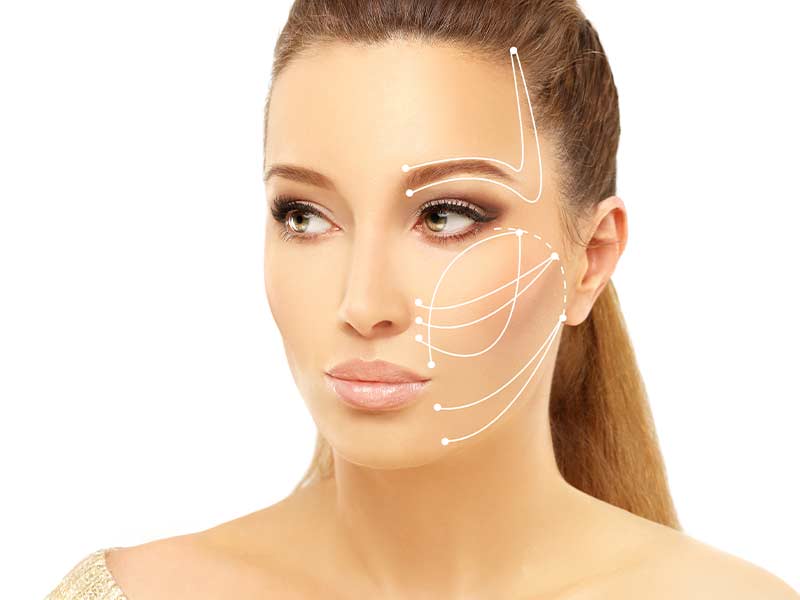
Temple lift or eyebrow lift surgery is a cosmetic surgery, the purpose of which is eyebrow lift, eyelid drooping and eye shaping. Eyebrow lift surgery is performed by making incisions in the temple area, then the facial muscles are stretched from the temple area and the incisions are sutured. A temple lift causes an eyebrow lift and the elimination of crow’s feet lines around the eyes. To learn more about the temple lift, it is better to read the article about everything related to the temple lift.
What is the purpose of temple lift surgery?
The purpose of temple lift surgery is to increase the beauty criteria. Cosmetic plastic surgery is a combination of medical technology combined with artistic aesthetics. A cosmetic surgeon must be well aware of facial anatomy and composition, aesthetic principles, and medical techniques.
Since the human face is a major part of his beauty, it is necessary to pay attention to the details of each of its components. On the other hand, a person’s face is our first encounter with him. Having smooth skin on the upper part of the face is a result of temple lift surgery.
What is a temple lift with thread?
Another method of temple lift is the use of thread. In this method, facial muscles are pulled back using suture threads. These threads are made of sewing thread and are completely harmless. The durability of a temple lift with thread is temporary and needs to be repaired after about two years.

Common side effects of temple lift
Forehead skin pulling and temple lifting, like any other procedure, has its own complications and disadvantages. Apart from the side effects after anesthesia, there are things that can affect anyone. Finding a good doctor and performing the procedure under the supervision of a specialist doctor can be the best way to avoid its symptoms. However, the complications of this procedure are somewhat unavoidable. The following reactions and symptoms are among the most common side effects of temple surgery.
Symptoms after anesthesia
Anesthesia is a strange thing. You spend hours without any memory or consciousness until the doctor creates injuries in your body. These side effects include dizziness, nausea, fever and chills. After anesthesia for surgery, such symptoms are normal. Although the occurrence of such symptoms is completely normal and often there is nothing to worry about. It is only important to be aware of the experience and expertise of the anesthesiologist. One of the possible risks of temple lift surgery is the fatal and allergic risks of the patient to anesthetic drugs. So be very careful in this area.
You can call or visit Mahziar Clinic, in addition to performing the surgery under the supervision of a plastic surgeon, you can also fully consult with the doctor about the complications of anesthesia.
Pain, swelling and bruising
How to perform a temple lift is very important. Non-surgical temple lift surgery is one of the painful procedures. Pain in the surgical area is completely normal. If you take the tips and care after the operation seriously and follow them, you will be safe from these pains. You should inform the doctor only if the pain worsens.
Also, bruising and swelling around the eyes are inevitable for a few days after the operation. These bruises will disappear up to two weeks after the operation. If you want to use cosmetics to cover scars and bruises, you must consult your doctor.
Scars and scars
Cuts that are made on the surface of the skin will cause the formation of scars. One of the side effects of temple surgery is the same. The scars created on the skin will remain for some time. However, this complication is largely dependent on the treatment method. Some temple surgery procedures, such as the endothene lift, make smaller incisions in the skin. In such procedures, the scars are less noticeable.
Numbness and slow healing process
Some people experience numbness in the facial muscles after temple surgery. This complication is due to damage to the facial nerves. In most cases, numbness resolves within a few weeks. But if the anesthesia lasts longer, you need to see your doctor. On the other hand, the healing process may also take some time. The recovery period will be longer, especially for those who have undergone a temple lift operation with endothene. Recovery after surgery also depends on several factors. Pre- and post-operative care, the doctor’s expertise and following his recommendations can accelerate recovery.
Complications of temple lift with thread
Although temple lift is performed without anesthesia and only with local anesthesia, it may show its own side effects in some people. The complications of temple lift with thread are as follows:
- Pain, swelling and bruising at the injection site
- Incidence of infection
- Bleeding
- Possibility of sensitivity to threads
- Wound formation
- The possibility of asymmetry in case of lack of skill of the doctor
- Sensitivity to touch
Temple lift price
The cost of a temple lift varies depending on which method you choose. In temple lift surgery, the costs related to surgical equipment, doctor’s fees, anesthesia costs, etc. are effective in the price of temple lift. In the temple lift method with threads, in addition to the doctor’s salary, the number of threads used is effective in calculating the price of the temple lift with threads.
How to perform a temple lift?
In this procedure, the patient is first put under complete anesthesia. This stage is done by injecting anesthetic to the patient. Then, by making a surgical incision behind the hair growth line, the doctor starts the surgery. Depending on the method you choose, the cuts will be small or large. By making an incision, the doctor’s hand is opened to remove the fat and the skin underneath. Then it is necessary for the doctor to create the new position of the eyebrows.
After releasing and lifting the skin, a place for it is determined using a permanent suture. Using surgical screws and special tools, the new position will be maintained. At the end, it is necessary to create the conditions for healing the wounds and reaching the final state by suturing and closing the incisions. At the time of suturing, absorbable threads and stapled clips are used. Then the patient will enter the period of recovery and post-operative care.
The best candidate for temple lift surgery
Today, face lift and temples are performed in many centers in the country. This incident has made many people eager to do this procedure. Those looking to find a good doctor for temple surgery need to address a more important issue first. Whether you are the right person for this operation or not. To perform this operation, you must have sufficient and complete general health. Have realistic expectations of the result of the operation and do it with the aim of solving hereditary problems such as drooping of the eyebrow or temple skin. Also, consider the costs. With such conditions, you can get the best result from surgery.
Conclusion
Now we know better the answer to this question: Does temple surgery have complications? When you go into surgery with an open mind and without unrealistic expectations, you will have a more favorable experience. Temple lift surgery can give you remarkable results. It is only necessary to carry out the treatment process under the supervision of a specialist and experienced doctor.
