
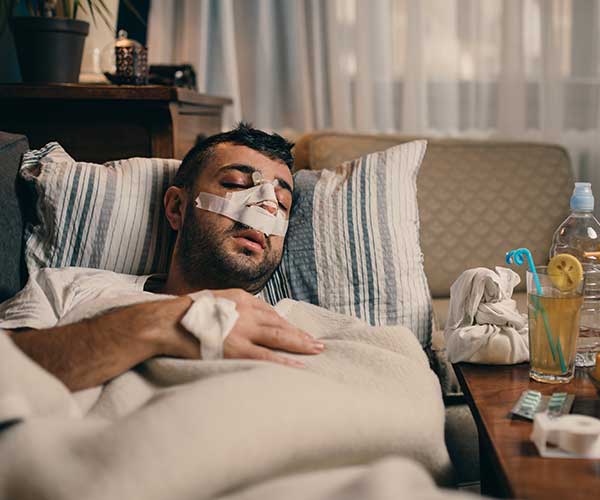
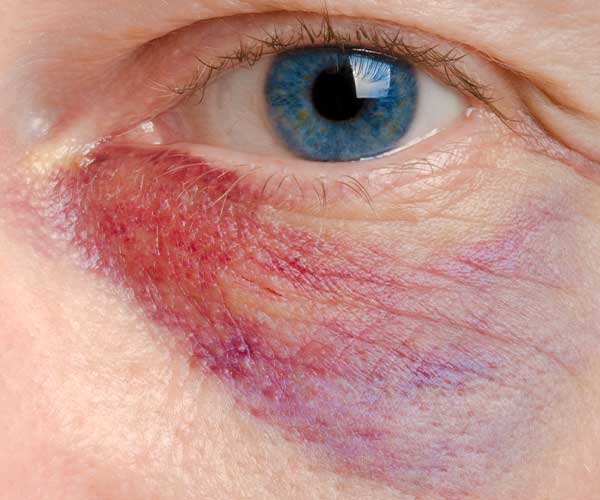
One of the side effects of nose surgery is bruising around the nose and under the eyes. Although we all know that this complication is resolved much faster than nose swelling and other complications, but the question is, what care is needed to treat bruises after nose surgery? In the rest of this article, we will answer this question and explain the reasons for bruising after nose surgery.
Causes of bruised eyes after nose surgery
Various factors cause bruises under the eyes and around the nose after various types of rhinoplasty. The most important reason is the slight bleeding in the damaged and wounded areas. In fact, due to changing the tissues of the skin, bone and cartilage of the blade and tip of the nose, the vessels of the nose are damaged.
Therefore, bleeding causes bruises under the eyes. Other factors that change the severity of eye bruising after nose surgery include:
- Rhinoplasty procedure (open or closed)
- The scope and complexity of the operation
- Coagulation disorders of the patient’s blood
- Individual factors such as age and thickness of nasal skin
- Not complying with care to reduce swelling of the nose after surgery
The question may be raised, what is the meaning of nasal edema care? In short, it should be said:
- Not raising the head after nose surgery
- Nodding to laugh and talk
- Not following the diet
- Lifting heavy objects
- Bonding after nose surgery
If the care to remove swelling of the nose is ignored, the bruises around the eyes and around the nose will also be removed with a delay.
Necessary care for treating bruises after nose surgery
In order for the bruise treatment process to go well after nose surgery, it is necessary to consider important points before and after surgery. In the following, we will introduce you to the care of nose surgery to resolve the complication of bruising.
Care before nose surgery
Avoiding taking medicines such as aspirin, codeine, ibuprofen and medicines that increase blood concentration
Adjusting the use of medications such as blood pressure medications and cardiovascular medications
Consult the surgeon about the medical record and all medications that are taken regularly
Preventing the use of herbal supplements that increase blood concentration
Stop drinking alcoholic beverages one week before rhinoplasty
Do not smoke for one to two weeks before nose surgery
The face must be clean of sun cream and any cosmetics before the start of rhinoplasty
Care after nose surgery
Using cold water and ice compress in the first 48 hours after rhinoplasty will remove a lot of swelling and bruising around the eyes and nose. Be careful not to press the nose with a cold compress.
Up to 2 weeks after surgery, keep your head higher than your body when sleeping. You can use different pillows for this.
Wounds on the nose and around it are removed by spending a lot of energy from the body. Therefore, it is better to increase your rest time in the first week after surgery. Of course, absolute rest increases bruising and swelling.
Consuming natural juices such as celery juice, carrot juice and pineapple juice in the first 72 hours helps to treat bruising after nose surgery.
Using warm water compress from the third day after surgery helps to improve blood supply to the damaged areas of the nose and its surroundings.
Use pain relievers such as codeine and acetaminophen only as prescribed by your surgeon.
Following the diet after nose surgery
One of the points that helps to eliminate the complications after bone and meat nose surgery is to follow the diet. This issue causes many people to ask what foods to eat. In response, it can be said that eating foods containing vitamin K plays an important role in reducing the bleeding of damaged capillaries in the nose. Therefore, eating vegetables, turnips, soybeans, squash, spinach and celery are important in supplying vitamin K to your body.
The time it takes to resolve eye bruises after nose surgery
Now that we know what solutions are suitable for treating bruises after nose surgery, it is better to examine the process of solving this problem.
Many believe that eye bruising begins at the same time as rhinoplasty is completed. But you need to know that bruises appear around the nose and under the eyes around 24 hours after the surgery. It reaches its peak after 72 hours. Eye bruising decreases from the third day onwards. In the space of 7 to 10 days after the surgery, there will be no bruises on the face. So that when the splint is removed from the nose, the area around the nose and eyes is not bruised.
Despite this, it is necessary to know that a person’s physical condition and medical history, such as medications and underlying diseases, have an effect on the occurrence of bruising and its severity. In such a way that the effect of eye bruising is not seen in some patients. But the area around the nose and eyes of some people remains bruised even for 2 months.
The type of nose surgery and the amount of bruising
It is interesting to know that the difference between the bony nose and other models in the occurrence of bruising is still visible. In such a way that meat noses that have thick skin will have deeper wounds. Therefore, the bruise remains longer after a meaty nose surgery than a bony nose surgery.
In addition to whether the nose is bony or fleshy, whether the surgery is open or closed has an effect on the severity and durability of the eye bruise. During open surgery, incisions are made around the nose and under the nasal septum, and the skin is separated from the bone and cartilage. But in the closed type, different incisions are made inside the nose. Therefore, patients with open surgery experience more and longer bruising.
Is bruising after nose surgery dangerous?
As we mentioned about the duration of treatment of bruising after nose surgery, bruising is considered a short-term complication. Compliance with the mentioned tips will remove the bruise and it is not a dangerous complication. But there are conditions that make eye bruises dangerous. If the patient experiences symptoms such as the following, he should consider the bruise as a dangerous complication and consult a surgeon to resolve it.
Facial redness and bruising
Rising body temperature
nausea
dizziness
Visual impairment
Weakness in moving the eyes
Conclusion
Bruising around the nose and under the eyes like swelling and breathing problems after rhinoplasty is one of the common side effects after this procedure. Bruising is resolved faster than other complications. But if the patient does not follow the principles of care before and after surgery, he will witness the persistence of this complication. The physical condition of the disease, the characteristics of the nose, and even the open or closed type of operation have an effect on the severity and durability of the bruised eyes. However, taking care of nose surgery speeds up the process of removing bruises.
