
Rhinoplasty is one of the most common cosmetic procedures. This practice is also done frequently in Iran. Like any other surgery, rhinoplasty may have complications. Respiratory problems after surgery are one of the most common side effects of this procedure. Many times this problem is temporary. But it may not be resolved in a short time and needs treatment. Of course, nose surgery has many complications. These side effects also depend on the types of nose surgery.
For example, rhinoplasty is different from other types of nose. In this article, we are going to discuss the complications of nose surgery and breathing problems after nose surgery in general. If you are planning to have your nose cosmetic surgery done, you should first of all be aware of its possible side effects. Stay with us in the rest of this article to check the side effects of this surgery.
Complications of nose surgery
Bruising after nose surgery is one of the side effects of nose surgery. It is safe to say that bruising after the operation and its recovery time are among the important issues that worry patients after this operation. Treating bruises after nose surgery, like breathing problems, has ways that doctors recommend to the patient after surgery. For example, in the first 72 hours after the operation, use natural juices such as celery juice, carrot juice, and pineapple juice in order to reduce bruises more quickly.
Common respiratory problems after nose surgery
As mentioned, breathing may be difficult after nose surgery. Breathing problems after rhinoplasty are usually due to compression of the nasal valve at a lower angle than before.
The nasal valve can be simply described as the angle at which the septum (wall of the nose) meets the nostrils. The area we’re talking about is about 1.5cm inside your nose. If this angle becomes smaller after surgery, your ability to breathe may decrease.
Often, in addition to common breathing problems, the nose swells after surgery. To reduce swelling of the nose after surgery, nasal tape is usually used to fix it. Taping and regular examination are all part of nose surgery care that should be done in the most correct way.
Reasons for breathing problems after nose surgery
As mentioned, you may face breathing problems after nose surgery. But what is the reason for this problem and when does it often occur? This will usually happen after hump reduction. But what is the main cause of breathing problems after nose surgery?
Because of the swelling of the lining and structure inside the nose, it will usually be temporarily difficult to breathe through the nose following rhinoplasty. But you should know that newer techniques have been developed in rhinoplasty, which makes the level of nasal breathing problems not re-formed like before rhinoplasty. Rhinoplasty has evolved significantly over the past twenty years. This point will cause less complications after nose surgery.
Sometimes breathing problems may be caused by allergies. If the main cause of breathing problems after nose surgery is related to allergy, then the person should use corticosteroid sprays and drugs until the severe symptoms are resolved. Of course, considering that these drugs weaken the body’s immune system, their dosage should be under the supervision of a doctor.
The method of diagnosing blocked nasal valves and breathing problems
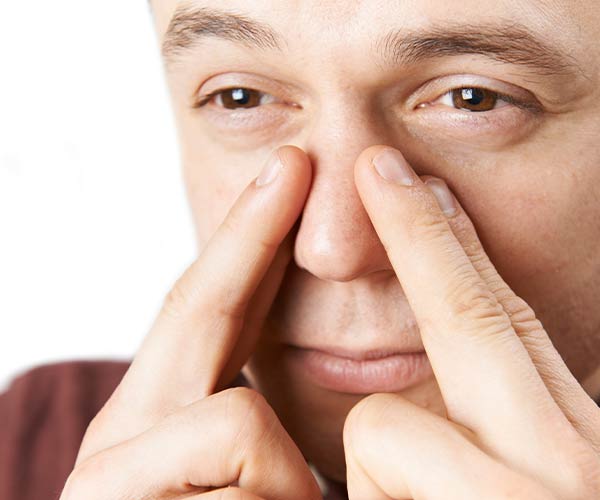
To check if your nasal valve is causing the problem, place your index finger and thumb over your nose. As if you want to take one side of it. The point where you want to place your hand is right where the soft part of the bridge of the nose meets the bony part (about halfway down the nasal passage). Now you should slide and move it towards your forehead while holding enough skin with your hand. If you are able to breathe better with the skin sliding up, you probably have a nasal valve problem that can be corrected by your surgeon.
Other problems may include nosebleeds, which sometimes occur if you have a perforated septum (a hole in the wall that divides your nose). This tissue can get really dry and bleed easily. Especially when you blow your nose or sneeze. Of course, there are other possible reasons. For example, when the septum has been treated and is still not completely healed. You can also go in front of the mirror to identify this point. Look inside your nose and see if it is clear from one side to the other. If this problem exists, it can be treated by a specialist.
How many days after nose surgery can you breathe through your nose?
Many people are concerned about how the reshaped nose will affect their breathing after rhinoplasty. After the surgery, for up to a year, there will be swelling inside the nose. This condition, as mentioned earlier, often leads to some minor breathing problems early in the surgery. But you should know that this problem will be resolved within 1 to 3 months. Most swelling usually resolves within 6 weeks after surgery, but it can last up to a year.
During the recovery period, you can treat any swelling that may occur with ice or an ice pack. Ice compresses will also help relieve inflammation. As the internal swelling is removed, the internal space becomes more open and breathing becomes much better.
last word
As you read, rhinoplasty is one of the most common cosmetic procedures and it has different types. For example, the difference between the bony nose and other models is effective in complications after surgery. Glueing after nose surgery is also one of the most important things that should be paid attention to. Rhinoplasty, like any other surgery, may lead to complications. One of the most common side effects is respiratory problems. These problems are easy to detect and can often be fixed with techniques. Finally, if you intend to have your nose surgery, it is recommended to go to reputable clinics and specialists to minimize the possibility of any problems.
